Instant Win Giveaways Done Right: Fraud Prevention, Prize Tiers, and Legal Compliance
Instant win giveaways drive huge engagement, but the "win instantly" mechanic leaves no room to catch fraud before a prize goes out. This guide covers the fraud controls that actually work, how to structure prize tiers so they stay affordable at scale, and the sweepstakes laws you're legally required to follow, plus how Rogue Ales & Spirits used a Spin to Win instant win campaign to collect over 22,500 email addresses for under $750 in prizes.
:format(webp))
Instant win giveaways work because there's no waiting. You enter, you find out right away, and that little jolt of "did I win?" is a big part of why these campaigns tend to pull in more engagement than a standard sweepstakes. But that same immediacy is also what makes them riskier. When a prize gets awarded the second someone finishes an entry, there's no window to review anything before value changes hands. So if you're planning an instant win campaign, fraud prevention and legal compliance can't be things you figure out later. They need to be built into the mechanic from day one.
Here's what that actually looks like, plus a real example of a brand that got it right.
Why Instant Win Carries More Risk Than a Normal Giveaway
In a typical sweepstakes, you collect entries for a set period and pick a winner at the end. That gap gives you time to spot duplicate entries, check eligibility, and catch anything sketchy before a prize goes out.
Instant win skips that buffer entirely. You set the odds ahead of time (say, 1 in 10), and the moment someone crosses that threshold, they're told they've won, often before anyone on your team has looked at the entry. This is exactly what bots and contest farmers go after. A script can submit hundreds of entries in a few seconds, fishing for a winning moment before anyone can step in.
The takeaway is simple: an instant win mechanic without real-time fraud controls isn't just a marketing risk, it's a liability.
What Actually Prevents Fraud
Check for duplicates and identity issues as entries come in, not afterward. When a giveaway attracts a lot of participation, bots may show up to crash the party. Filtering by email alone won't cut it. ShortStack’s Fraud Filter allows you to enter suspicious domains or patterns in email addresses to either be flagged for later review, or blocked alltogether. In an instant win giveaway, set up the Fraud Filter to trigger the “did not win” action to when a suspicious entry matches the filter.
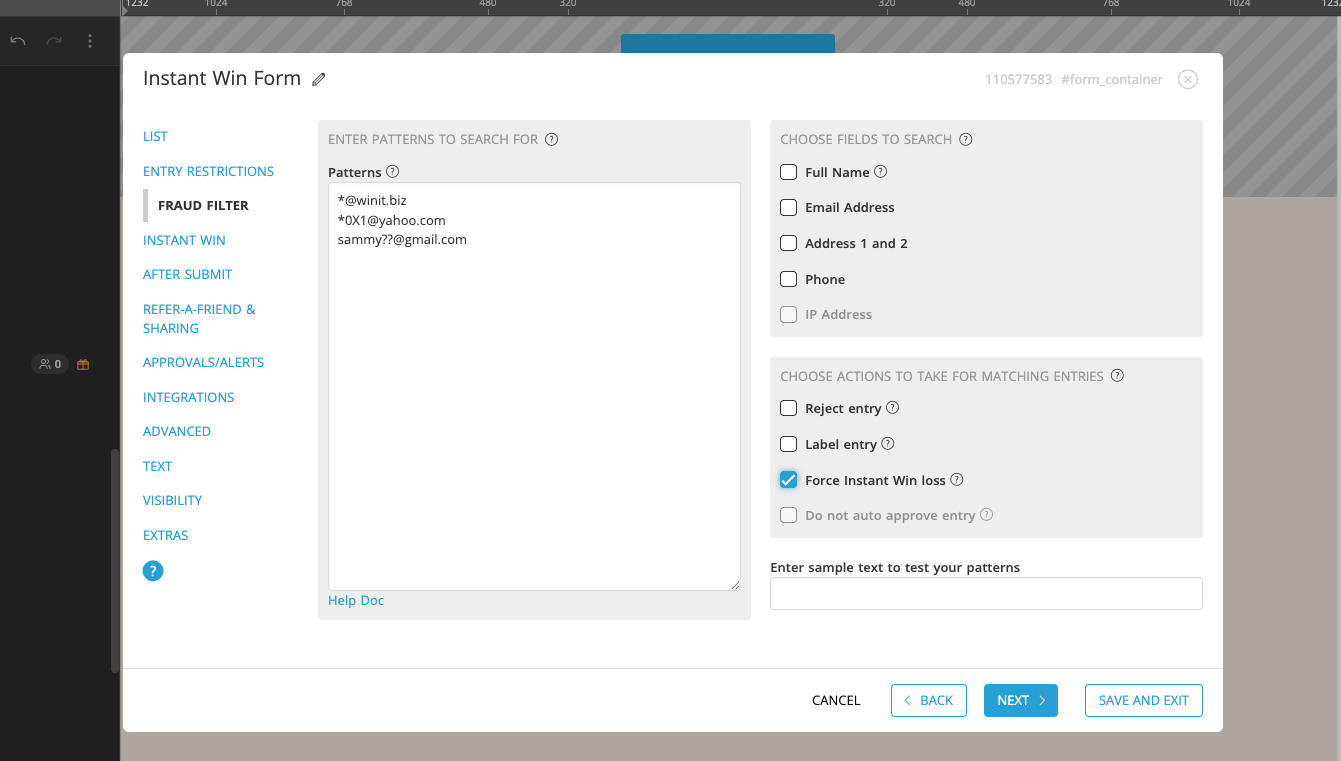 ShortStack's Fraud Filter lets you flag or block suspicious entries
Hold off on fulfilling bigger prizes instantly. For anything worth more than roughly $50, don't auto-ship the prize the second someone "wins." Flag it for a quick review first. The entrant still gets that instant "You Won!" moment, but you get a checkpoint before anything actually goes out the door.
Use a CAPTCHA or similar bot check on the entry form. It's basic, but it's still one of the most effective single filters against scripted mass entries.
Keep a record of everything. Log total entries, outcomes, timestamps, and how eligibility was determined. If a winner is ever challenged, whether by a participant, a regulator, or a platform like Instagram, that paper trail is what protects you.
How to Structure Prize Tiers
Instant win campaigns tend to work better with a tiered prize structure instead of one single grand prize. It keeps people engaged throughout the campaign since most entrants walk away with something, not just a shot at one thing, and it gives you more control over your total payout.
A simple structure to work from:
- Grand prize (1 or 2 units): the headline item that gets people excited to enter in the first place.
- Mid tier prizes (dozens of units): valuable enough to matter, but cheap enough to give out at volume, like product bundles or gift cards.
- Small instant perks (unlimited or high volume): discount codes or extra entries into a secondary draw, given to everyone who doesn't land a bigger prize. This is what keeps the campaign feeling rewarding even for people who don't win big.
A Real World Example from Rogue Ales & Spirits
A good real world example of this in action is Rogue Ales & Spirits. When Rogue redesigned its canned cocktail line in 2022, the team wanted to get the new look in front of as many people as possible without spending a fortune. They built a Spin to Win instant win campaign using ShortStack: entrants filled out a short form (name, email, and age, since alcohol was involved), then spun a virtual slot machine for a chance to land three matching symbols and win instantly.
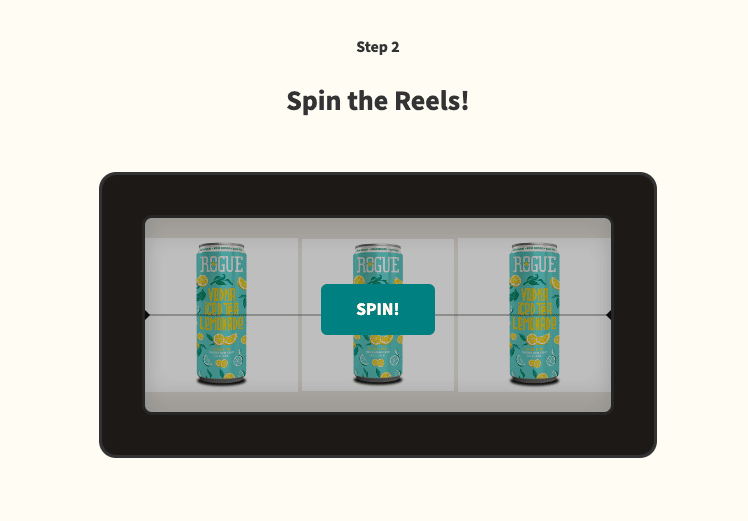 Rogue's #MixedOpportunity Spin-to-Win Giveaway
The prize tiers were deliberately modest: keychains, air fresheners, stickers, canvas bags, tube socks, and small discount codes, with one bigger prize (a GoPro) for everyone who entered, regardless of whether they won instantly. Total prize value came out to under $750. But the campaign brought in over 22,500 email addresses, at roughly 3 cents per lead, and the newsletters Rogue sent to that new list saw a 54% open rate, more than double the industry average. The instant win layer made entering feel fun and immediate, while the low cost, high volume prize tier kept the whole thing affordable at scale.
That's the model worth copying: small, plentiful instant prizes to drive volume, one or two bigger prizes to drive excitement, and a mechanic simple enough that people don't need an explanation to participate.
Get started with ShortStack’s Spin-to-Win Giveaway Template. Start for free - no cc required.
The Legal Side You Can't Skip
Instant win campaigns are legally sweepstakes, not contests, since winners are picked by chance rather than skill. That distinction matters because it puts you under sweepstakes law, which comes with its own requirements:
- Official rules aren't optional. At minimum, spell out each prize tier, the odds of winning at each level, how to enter, who's eligible (age, location, exclusions), the start and end dates with time zone, and how winners get notified. If you need help, we have a free rules generator here.
- No purchase necessary. In most places, if entering requires a purchase, you're technically running an illegal lottery, not a sweepstakes. If there's any purchase path involved, include a free alternative method of entry. Read more about that here.
- Exclude employees and immediate family. Standard practice, and something both regulators and platforms expect to see.
- Check prize value thresholds by state or country. Some places require permits once a prize passes a certain dollar amount. Look this up before launch, not after.
- Platform rules are a separate layer. If you're running this on Instagram or Facebook, their promotion guidelines apply on top of sweepstakes law. Both matter, and neither one substitutes for the other.
Rogue handled this by collecting age at entry (since alcohol prizes and cocktail branding were involved) and keeping the mechanic simple: one entry per person, clear rules, and a real prize pool that matched what was advertised. Nothing flashy, just done correctly.
What to Look for in a Platform
Not every giveaway tool is set up to handle the mix of real-time fraud detection, tiered prize logic, and compliance paperwork that instant win requires. When you're evaluating options, focus less on fancy UX and more on infrastructure:
- Does it catch duplicate or fraudulent entries as they happen, or only in a report after the campaign ends?
- Can you cap how many prizes go out per tier, independent of the odds you set?
- Does it keep an audit trail automatically, or will you be piecing that together yourself if something gets challenged?
- Does it include a built-in email autoresponders to notify winners with prize codes and/or redemption instructions?
Instant win is one of the most engaging formats out there, but only when the mechanic behind "you won!" actually holds up. Get the fraud controls, prize structure, and paperwork right before launch, and the format does the rest, the way it did for Rogue.